光照与光谱:流明(Lumen)代表什么?为什么室内用蓝/红/紫光代替阳光?底部补光真的有用吗?
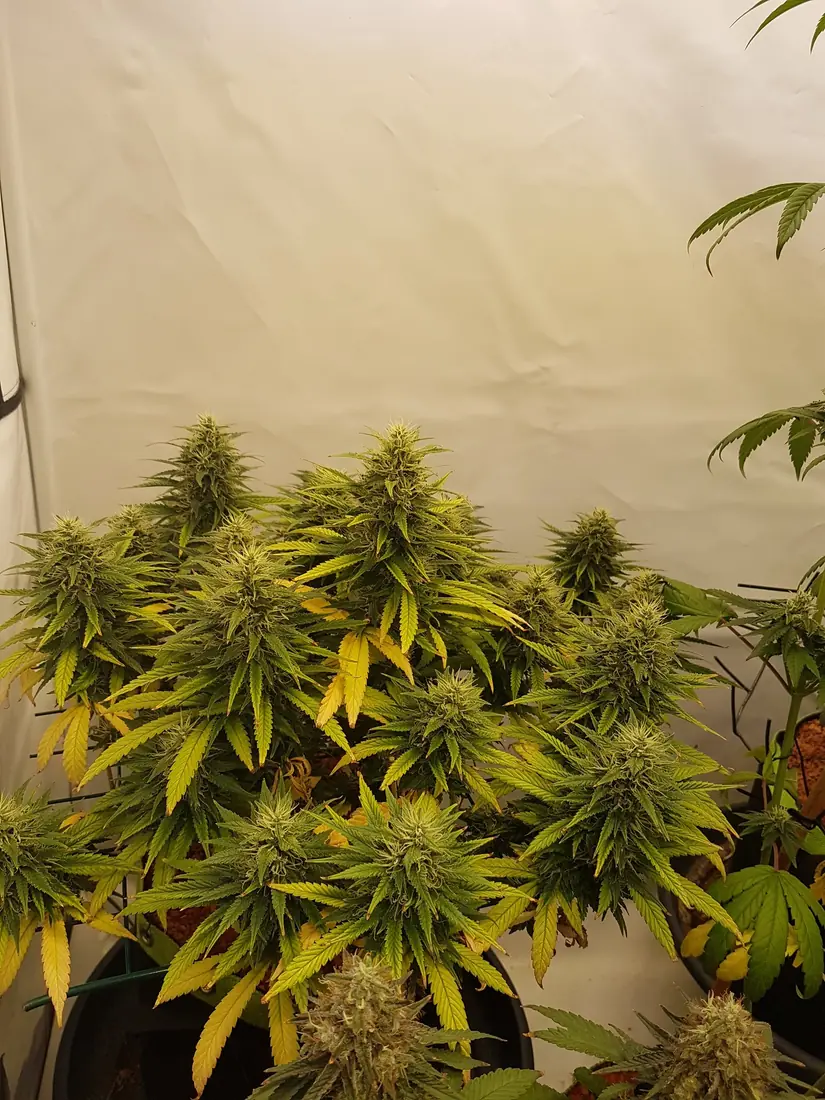
为什么流明对植物是错误的指标(详解 PAR、ePAR、PPFD 与 DLI),太阳光谱如何随季节变化,紫光“Blurple”LED 为何被全光谱取代,以及为什么双面叶的叶片解剖结构不需要底部强光。
1. 流明(Lumen)与勒克斯(Lux)代表什么——为什么对植物是错误的指标?
Household bulbs and older grow lamps prominently advertise lumens (lm) or lux (lx = lumens per m²). Yet judging a plant light by lumens is a classic physics trap:[1][3] well established
- Lumens measure human eye brightness (photometry): Human daytime (photopic) vision follows the V(λ) luminosity function, which peaks sharply at 555 nm (green-yellow). To the human eye, deep blue (430 nm) and deep red (660 nm) appear relatively dim, and far-red (700–750 nm) is nearly invisible.[3][4]
- How plants use light (McCree action spectrum & Stark–Einstein law): Photosynthesis is a quantum process driven by the number of absorbed photons, regardless of how bright they look to human eyes.[1][3] In his landmark study, Keith J. McCree (1972, Agricultural Meteorology) demonstrated that while extracted chlorophyll a and b peak in the blue (430–450 nm) and red (640–660 nm) regions, intact crop leaves use accessory pigments (carotenoids) and internal light scattering to harvest the entire 400–700 nm (PAR) waveband – and together with far-red photons up to 750 nm (ePAR).[1][4]
A green-yellow streetlamp boasts huge lumen numbers while starving a plant of key blue and red photons. Conversely, a fixture rich in 660 nm deep-red diodes looks dimmer to human eyes (fewer lumens) while delivering maximum photosynthetic power to the chloroplasts![1][3]
Comparison Table of All Key Light Metrics (Lumens to PPFD & DLI)
| Metric (Unit) | What It Measures | Relevance & Target Ranges for Cannabis sativa |
|---|---|---|
| Lumen (lm) & Lux (lx = lm/m²) | Light weighted by human photopic vision V(λ) (555 nm green-yellow peak). | Unsuitable for plants: severely undervalues blue (450 nm) and deep red (660 nm) and ignores far-red (730 nm).[1][3] |
| PAR & ePAR (nm spectral window) |
PAR (400–700 nm): Photosynthetically Active Radiation.[1] ePAR (400–750 nm): Extended PAR including far-red photons that synergistically drive photosynthesis (Zhen & Bugbee 2020).[4] |
Defines the wavelength window used by plants, not the intensity. |
| PPF (µmol/s) |
Photosynthetic Photon Flux: Total photosynthetic photons emitted per second by the lamp (1 µmol = 6.022 × 10¹⁷ photons).[3] | Measures total fixture output, before accounting for tent area or hanging height. |
| PPFD (µmol·m⁻²·s⁻¹) |
Photosynthetic Photon Flux Density: Photosynthetic photons actually reaching 1 m² of canopy per second.[3][5] | Primary target metric (at ambient CO₂): • Seedlings & cuttings: 150–300 µmol·m⁻²·s⁻¹ • Vegetative stage: 400–600 µmol·m⁻²·s⁻¹ • Flowering stage: 700–1,000 µmol·m⁻²·s⁻¹ (Above ~1,000–1,200 µmol·m⁻²·s⁻¹ without CO₂ enrichment risks light saturation & photoinhibition!)[5][7] |
| DLI (mol·m⁻²·d⁻¹) |
Daily Light Integral: Total photons delivered per m² per day (DLI = PPFD × light hours × 0.0036).[3][5] | Explains why 600 PPFD over 18 hours (38.9 mol/m²/d) delivers the exact same daily photon dose as 900 PPFD over 12 hours of bloom (38.9 mol/m²/d)! |
| System Efficacy (PPE) (µmol/J) |
Micromoles of photons generated per Watt-second (Joule) of electrical energy. | • Legacy HPS/MH lamps: 1.3–1.7 µmol/J (high radiant heat) • Modern full-spectrum LEDs: 2.5–3.1 µmol/J (nearly double photon output per Watt!)[3] |
2. 为什么室内种植有蓝光、红光和紫光(“Blurple”)灯,而户外却只有一颗太阳?
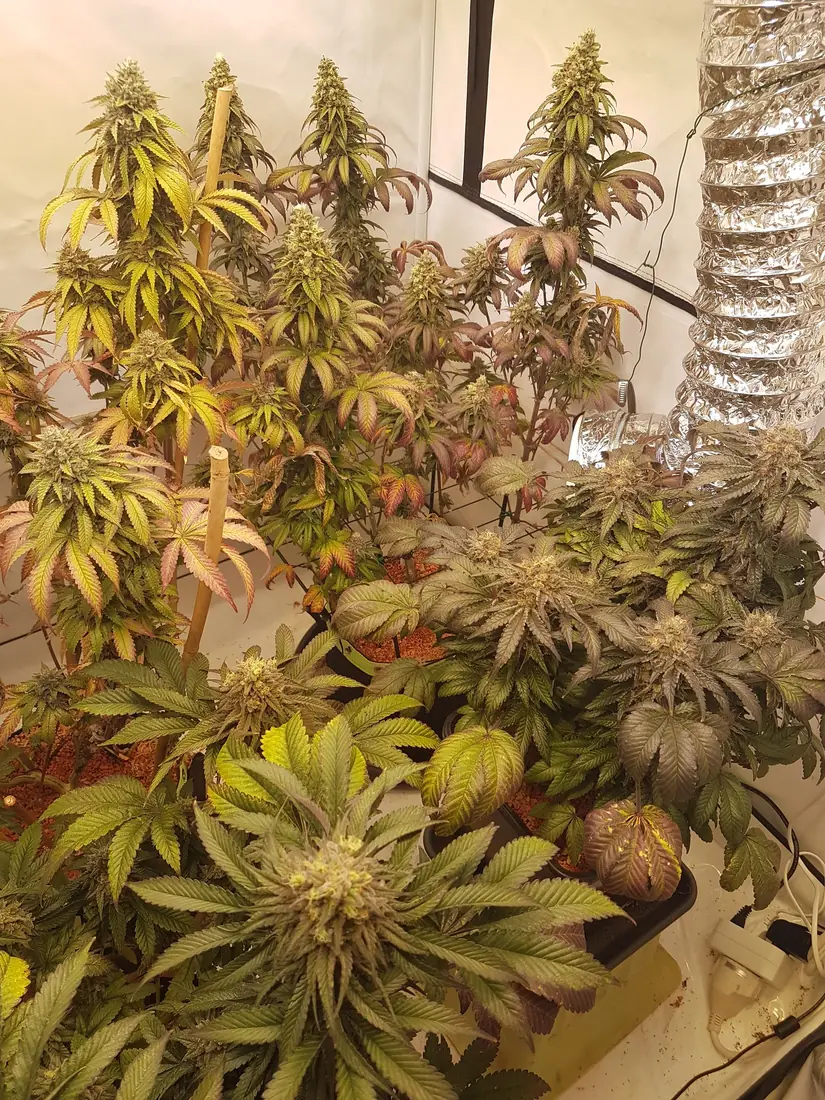
Why do indoor growers talk about blue veg lights, red bloom lights or violet LED panels when outdoors a single sun grows everything from seedling to harvest? The answer combines atmospheric physics with the history of lighting technology:[2][3][4]
2.1 The Sun Is Dynamic: How Sunlight Shifts Across the Day and Seasons
Following Flo’s motto “Understand nature, then copy nature”, sunlight is not static: as the solar elevation angle changes from spring to autumn, the path length through Earth’s atmosphere (Air Mass) and Rayleigh scattering shift the spectrum reaching the plant:[3][4]
- Spring & High Summer (high solar angle at midday – vegetative phase): Sunlight travels a short, steep path through the atmosphere and is rich in high-energy blue light (400–500 nm) and UV-A/UV-B. Blue light activates cryptochromes and phototropins, suppressing auxin-driven stem elongation so the plant stays compact with short internodes, thick leaves, sturdy stems and strong roots.[3]
- Late Summer & Autumn (lower solar angle – flowering & ripening phase): As the sun sits lower in the sky, short-wave blue light is scattered more strongly, shifting the spectrum toward red (600–700 nm) and far-red (700–750 nm) alongside shortening day length. This shift in the Red : Far-Red ratio (R:FR) flips the plant’s phytochrome system (Pr ↔ Pfr), triggering flowering stretch and floral maturation.[3][4]
2.2 History of Indoor Grow Lights & Why the Violet “Blurple” Era Failed
- Gas-Discharge Lamps (MH for Veg, HPS for Bloom): Early indoor growers had to swap bulbs because Metal Halide (MH) lamps emitted blue-white light (good for compact veg) while High-Pressure Sodium (HPS/NDL) emitted orange-red light (good for bloom, but caused stretching in veg).
- First-Generation “Blurple” LEDs (Blue + Red = Violet): Early white LEDs were inefficient, so manufacturers combined only narrow-band 450 nm blue and 660 nm red diodes matching the absorption peaks of extracted chlorophyll in a test tube – producing an unnatural violet/magenta (“blurple”) glow.
- Why Green Light (500–600 nm) Is Essential (Terashima et al. 2009; Bugbee 2016): In intact whole leaves, 70–85% of green light IS absorbed via internal mesophyll scattering (the “detour effect”).[2][3] While blue and red photons are absorbed almost entirely in the top chloroplast layers of the upper canopy, green light penetrates deep into the leaf interior AND deep into middle and lower canopy layers, driving photosynthesis more efficiently than red light alone under high PPFD![2] Moreover, white full-spectrum light lets growers immediately spot early nutrient deficiencies and pests that are invisible under purple light.
- Modern Full-Spectrum LEDs (Copying the Sun!): Today’s best LEDs combine white full-spectrum diodes (3000K–5000K) with 660 nm deep red (and optional 730 nm far-red via the Emerson enhancement effect)[3][4] – bringing true sunlight indoors in a single dimmable fixture!
3. 底部补光(Under-Canopy Lighting)真的有用吗——还是怀疑完全合理?
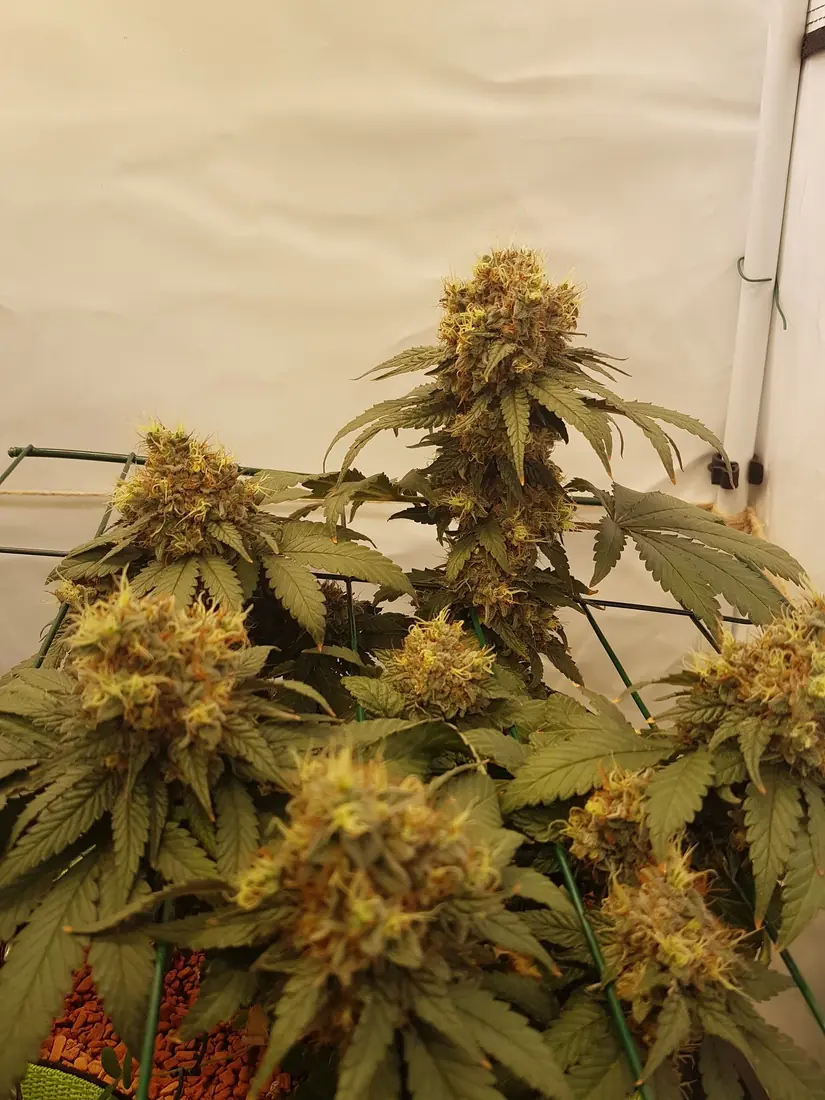
Recently, manufacturers have marketed under-canopy LED bars placed on the pots to shine upward against the undersides of leaves. Flo and many experienced botanists are skeptical of this trend – and leaf anatomy explains why:[2][6]
3.1 Leaf Anatomy: Why a Cannabis Leaf Has a Distinct Top and Bottom (Bifacial Leaf)
- Upper Leaf Surface (Adaxial side – the solar collector): Protected by a waxy cuticle and an epidermis with virtually no stomata, directly above tightly packed columnar palisade parenchyma cells rich in chloroplasts that act as optical light guides channeling light from above.[2]
- Lower Leaf Surface (Abaxial side – the breathing lung): Contains loose spongy parenchyma with air spaces for CO2 diffusion and the vast majority of stomata (guard-cell pores). Evolution placed stomata on the shaded, cooler underside so the plant can take in CO2 without desiccating under direct solar radiation.
- What happens when strong light and heat hit the underside? Direct radiation warms the abaxial surface and raises local leaf-to-air VPD right at the stomatal pores, risking stomatal closure (halting CO2 uptake!), lower internal quantum efficiency, and unnatural leaf twisting.[2]
3.2 Sub-Canopy Studies (Hawley et al. 2018) vs. Smart Canopy Architecture in a Home Grow
Where Sub-Canopy Lighting Came From
- In commercial trials on tall, unpruned high-density canopies (Hawley et al. 2018, HortScience), sub-canopy bars increased the dry weight and cannabinoid uniformity of shaded bottom “popcorn” buds by ~5–13% – but at the cost of extra electricity, extra HVAC cooling load and hardware expense.[6]
Why Flo’s Skepticism Hits the Bullseye in a 1–3 Plant Home Grow
- 1. Flat canopy architecture (Topping, LST, ScrOG): Training 1–3 plants into a flat, even canopy (see Training Methods) keeps all main colas in the optimal top PPFD zone without deep shaded lower tiers.[5]
- 2. Lollipopping costs 0 Watts: Clearing shaded lower shoots redirects 100% of water and nutrients from the root system into the top colas where leaves capture light naturally from above through their palisade cells.
- 3. Practical safety at the pot rim: Electrical bars sitting among wet pots, runoff, worm tea and nettle manure create unnecessary heat and splash hazards around the root zone.
Flo 的实战经验与 3 只缅因猫老虎:“理解自然,然后复制自然”
The first time I saw people laying LED bars on top of their pots to shine light upward at the undersides of leaves, my motto immediately came to mind: “Understand nature, then copy nature” (Kapier die Natur, dann kopier die Natur)!
Just ask yourself: In nature, does the sun ever shine upward out of the soil? Of course not! A leaf has its solar panels (palisade cells) on top and its sensitive breathing pores (stomata) in the cool shade underneath. Every morning, right after my full-spectrum LEDs switch on, I do my daily hand-watering check with good water, worm tea or diluted nettle manure (Brennnesseljauche) in my custom soil-worm-casting-sand-Seramis-Living-Soil mix – right when those stomata open to breathe. The last thing they want is a hot lamp blasting them from below!
Instead of wasting electricity on bottom lamps, my Half-Pot + Topping + Adventitious Root method builds two tiers of roots in the dark pot and 8 uniform main colas at the top catching full-spectrum light from above. And if you want proof of the world’s best spectrum, just watch my three Maine Coon tigers Cookie, Haze and Runtz: as soon as a real sunbeam hits the floor, Runtz is guaranteed to be napping right in the middle of it – 100% full spectrum at 0 Watts! 🐾
我个人最喜欢的植物灯:多年来我亲自测试过许多不同的植物生长灯,我个人最青睐的是 SANlight。我几乎用过他们的所有系列——从经典的 30 瓦单灯一直到 Q 系列和 EVO 系列——每一款我都可以问心无愧地推荐:因为他们不搞花哨的营销噱头,而是专注于真正的光生物学、模拟太阳的自然宽广全光谱,以及将光线从上方均匀、深入地引导至冠层内部的二次光学透镜设计。
Note: personal experiences are subjective, unpaid, and do not constitute advertising or a buying recommendation (§ 6 KCanG).
🌍 译文说明:本文原文以德语撰写并经过认真翻译。如果您是母语读者,发现某处表述或植物学专业术语可以进一步优化,欢迎发送邮件至 [email protected] 或在 X(@MisterSm3ilz420)上告诉我们——所有协助校对的朋友均可根据意愿载入我们的语言共建者致谢榜!
来源
所有链接最后核查于 2026 年 10 月 22 日。
- McCree KJ (1972): The action spectrum, absorptance and quantum yield of photosynthesis in crop plants. Agricultural Meteorology 9:191–216. doi:10.1016/0002-1571(71)90022-7 实验研究
- Terashima I, Fujita T, Inoue T, Chow WS, Oguchi R (2009): Green Light Drives Leaf Photosynthesis More Efficiently than Red Light in Strong White Light: Revisiting the Enigmatic Question of Why Leaves are Green. Plant and Cell Physiology 50(4):684–697. doi:10.1093/pcp/pcp034 实验研究
- Bugbee B (2016): Toward an optimal spectral quality for plant growth and development: the importance of radiation capture. Acta Horticulturae 1134:1–12. doi:10.17660/ActaHortic.2016.1134.1 综述
- Zhen S, Bugbee B (2020): Far-red photons have equivalent efficiency to traditional photosynthetic photons: Implications for redefining photosynthetically active radiation. Plant, Cell & Environment 43(5):1259–1272. doi:10.1111/pce.13730 实验研究
- Rodriguez-Morrison V, Llewellyn D, Zheng Y (2021): Cannabis Yield, Potency, and Leaf Photosynthesis Respond Differently to Increasing Light Levels in an Indoor Environment. Frontiers in Plant Science 12:646020. doi:10.3389/fpls.2021.646020 实验研究
- Hawley D, Graham T, Stasiak M, Dixon M (2018): Improving Cannabis Bud Quality and Yield with Sub-Canopy Lighting. HortScience 53(11):1593–1599. doi:10.21273/HORTSCI13173-18 实验研究
- Chandra S, Lata H, Khan IA, ElSohly MA (2008): Photosynthetic response of Cannabis sativa L. to variations in photosynthetic photon flux densities, temperature and CO₂ conditions. Physiologia Plantarum 134(4):576–584. doi:10.1111/j.1399-3054.2008.01160.x 实验研究