Dossiê G13: super-variedade da CIA ou clone Afghanica? Mitos, fatos e se a genética original ainda existe
Few names in cannabis history are surrounded by as many legends as G13 (or G-13): secret government greenhouses in Mississippi, rogue lab technicians, the Hollywood film American Beauty and countless seed packs claiming to offer the “original”. What is backed by verifiable science and archival documents, what is oral breeder history – and do the original G13 genetics still exist today? Here is the complete fact check.
Note on neutrality & sources (§ 6 KCanG): This article strictly separates peer-reviewed research data, documented 1980s seed catalogues and oral breeder history. Breeder and cultivar names are cited purely as historical facts – with no advertising, no sponsorship, no shopping links and no promises of cure.[10]
🐾 Short Animation (15 sec): Cookie, Haze & Runtz Explain G13
Our three Maine Coon tigers summarise the key facts about the origin, genetics and morphology (BLD) of the legendary G13 in three steps:
1. The urban legend: CIA, “Government Indica #13” & American Beauty
The classic urban legend that circulated through magazines and early internet forums from the late 1980s reads like a spy thriller:
- The US government (variously the CIA, FBI or DEA) allegedly collected the world’s strongest Afghani indica lines at the University of Mississippi in the 1970s under Dr. Carlton Turner to breed a secret “super-strain” with 28% THC.
- From a batch of 23 numbered plants (G1 to G23 – “G” supposedly standing for Government Indica Strain #13 or Greenhouse #13), plant #13 stood out above all others.
- A rogue technician allegedly smuggled a single cutting out of the facility into the underground grower network.
In 1999, the Academy Award-winning film American Beauty cemented the myth in mainstream culture when character Ricky Fitts sells a bag for $2,000, declaring: “It’s called G-13. It’s genetically engineered by the U.S. Government. It’s extremely potent, but a completely mellow high. No paranoia.”[5]
2. What actually happened at the University of Mississippi (“Ole Miss”)?
Checking the official archives of the University of Mississippi School of Pharmacy in Oxford, MS and the peer-reviewed publications of its directors reveals what is true and what is fiction:[1][2][3][4]
Documented historical & scientific facts
- The federal project has existed since 1968: In spring 1968, the Research Institute of Pharmaceutical Sciences (RIPS) (now part of the National Center for Natural Products Research, NCNPR) at the University of Mississippi received the official federal contract (later under NIDA – National Institute on Drug Abuse) to cultivate standardized cannabis for research.[1]
- Dr. Carlton Turner & Dr. Mahmoud ElSohly: Both names from the legend are real: Dr. Carlton E. Turner joined the project in 1970 and directed it until 1981 (when he became White House Drug Abuse Policy Director under President Ronald Reagan). Dr. Mahmoud A. ElSohly joined in 1975 (when the DEA/NIDA Potency Monitoring Program launched) and became director in 1981.[1][2]
- Global landrace seed lots: According to UM’s official project timeline, in the 1976 season over 100 varieties of cannabis seeds from around the world (Mexico, Colombia, Jamaica, India, Thailand, Pakistan, Afghanistan) were planted for research.[1]
What refutes the “28% THC genetically engineered super-strain” myth
- No genetic engineering: Genetic engineering of cannabis did not exist in the 1970s or 1980s.
- Low-to-moderate THC levels in the 1970s/80s: In the NIDA Potency Monitoring studies published by ElSohly and Turner themselves – ElSohly et al. (1984, Journal of Forensic Sciences) covering 2,169 samples and ElSohly et al. (2000) covering 35,312 samples – average Δ9-THC in confiscated US marijuana was below 1.5% in 1980 and around 3.3% in 1983/1984; even seedless sinsemilla buds averaged 6–8% THC.[2][3][4]
- Sinsemilla cultivation at UM only began in 1984: According to UM’s own timeline, experimental sinsemilla techniques were first developed at the project in 1984.[1]
3. How G13 entered the breeding world: Sandy Weinstein & Neville Schoenmakers (1984–1987)
The earliest verified print record of G13 is the 1987 catalogue of The Seed Bank of Holland, written by Australian-Dutch breeding pioneer Neville Schoenmakers (1956–2019):[5]
“G-13 is an outstanding indica cutting reputedly ‘liberated’ from the government research program in Mississippi, and now we have it. Widely grown as commercial indoor plant in the US, G-13 has proven to be one of the best breeding plants in our collection. G-13 hybrids have fast indoor flowering, high resin production, excellent potency, and extreme hybrid vigour.”[5]
Two details in Neville’s 1987 text stand out: (1) he wrote “reputedly ‘liberated’” in quotation marks, and (2) he noted that G13 was already “widely grown as commercial indoor plant in the US”. Within breeder oral history, two accounts explain how Neville obtained the cutting: either via American grower Sandy Weinstein (who passed away in 1987 and reportedly numbered his pure Afghani seedlings G1–G23, with #13 as his favourite) or via indoor growers in Portland, Oregon in 1986.[5] Botanically, all breeders who worked with the cutting agree that G13 was a pure, stocky, dark-green broad-leaf Afghanica (BLD) female with exceptional resin density and hybrid vigour.[5][7]
4. The crucial detail: why pure 100% G13 seeds never existed

G13 was exclusively a single female plant (a “clone-only” cutting). There was never a pure G13 male! And because commercial feminised seed production (using silver thiosulfate / STS; see Seed types explained)[9] was not yet used in the mid-1980s seed trade, Neville Schoenmakers could never produce pure 100% G13 seeds. Every original G13 seed release from The Seed Bank of Holland (1987–1990) was therefore an F1 hybrid (50% G13 mother × 50% pollen father from another line)![5] well established
5. Do the original G13 genetics still exist today? (3-tier answer)
| Level | Status Today (2026) | Historical Background |
|---|---|---|
| 1. Neville’s unhybridised 100% G13 mother clone | Lost / extinct | In the late 1980s / early 1990s (around Operation Green Merchant and the transfer of Neville’s stock to Ben Dronkers / Sensi Seeds), Neville’s original G13 mother plant lost vigour, stopped rooting and died. Both Neville and Sensi Seeds confirmed that the pure unhybridised mother clone did not survive in Europe.[5] |
| 2. Famous US cuts “Airborne G13” & “Pacific G13” | Preserved (as 1980s hybrid cuts) | Two legendary cuts preserved in North America – Airborne G13 and Pacific G13 – are considered by breeders and lineage databases to be standout female selections from Neville’s late-1980s F1 seeds (G13 × Hash Plant and G13 × Northern Lights #2) rather than the pre-1984 unhybridised cut.[5] |
| 3. Direct F1 descendants of the original G13 clone (50% original genetics) | Yes – verifiably preserved! | Before Neville’s G13 mother died, he pollinated her directly with his best males. Those original 1987–1989 F1 seed lots were frozen and preserved by breeders such as Shantibaba (Mr. Nice Seedbank), Sensi Seeds, Soma, Ed Rosenthal and US preservationists (e.g. ’88 G13 Hashplant). In these lines, authentic G13 mother genetics survive at 50% (and higher in backcrosses)![5] |
6. Authentic G13 descendants at a glance (incl. G13 Haze & Flo’s MC Cooki G13)
G13 × Hash Plant(“’88 G13 Hashplant” / “HP1.G13” & Mr. Nice G13 × Hash Plant): Neville crossed his Hash Plant cutting with Northern Lights #1 and used males from that cross to pollinate the original G13 mother (G13 × (Hash Plant × NL #1)). Re-released by Sensi Seeds in 1999 as Mr. Nice G13 × Hash Plant and preserved in the US as ’88 G13 Hashplant (88G13HP).[5]G13 × Skunk #1&G13 × Black Widow(Shantibaba / Mr. Nice Seedbank): Bred directly from Neville’s final G13 × Skunk #1 seed lot produced before the G13 clone died.[5]G13 × Northern Lights #2(The Seed Bank 1987–1989): Classic 1987 compact BLD hybrid.[5]G13 × Haze/G13 Haze– and the bridge to Flo’s own crossMC Cooki G13🐾: Neville crossed G13 with his original Haze males in the late 1980s (later passed via Ed Rosenthal to Soma), and in the 2000s G13 Haze (with Hawaiian Sativa/Haze genetics) won the 2006/2007 Cannabis Cup. This G13 Haze is one of the two parents of Flo’s own documented cross MC Cooki G13 (G13 Haze × Red Hot Cookies), featured in the Gallery: From Flo’s grow!MK-Ultra(G13 × OG Kush): Modern hybrid combining a G13 line with OG Kush.[5]
From Flo’s grow: Resinous inflorescences of modern hybrids
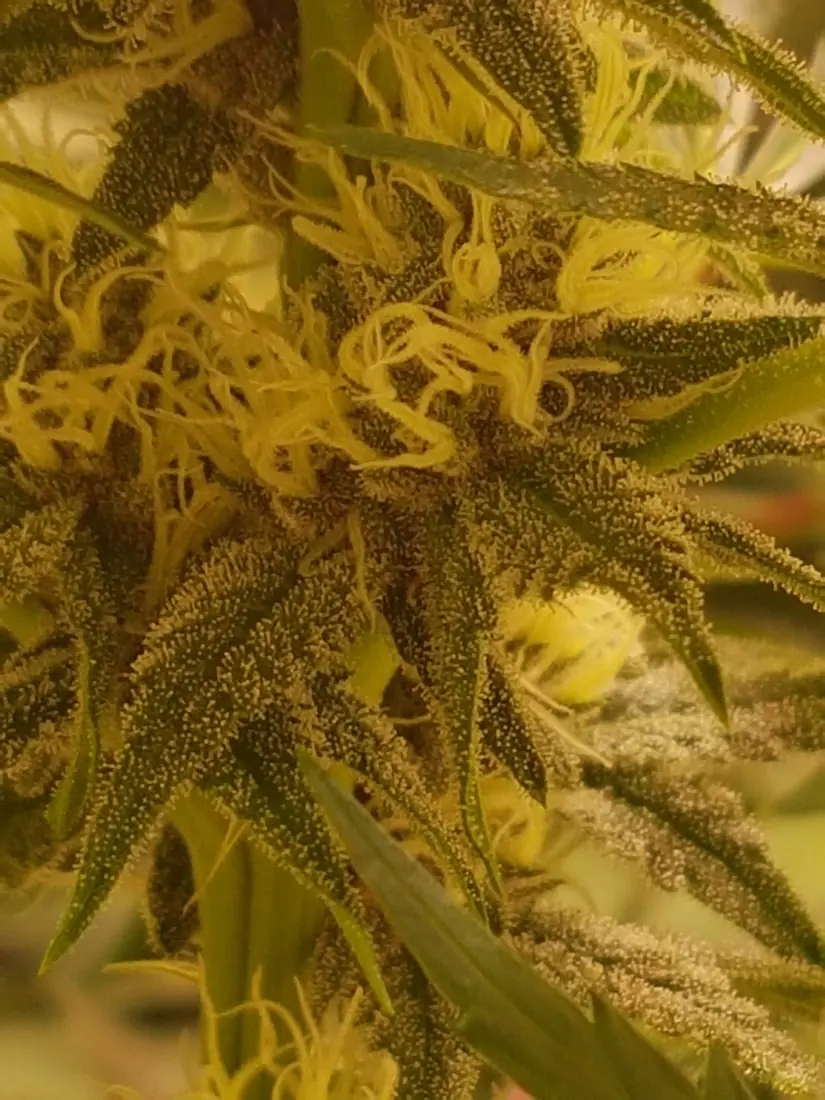
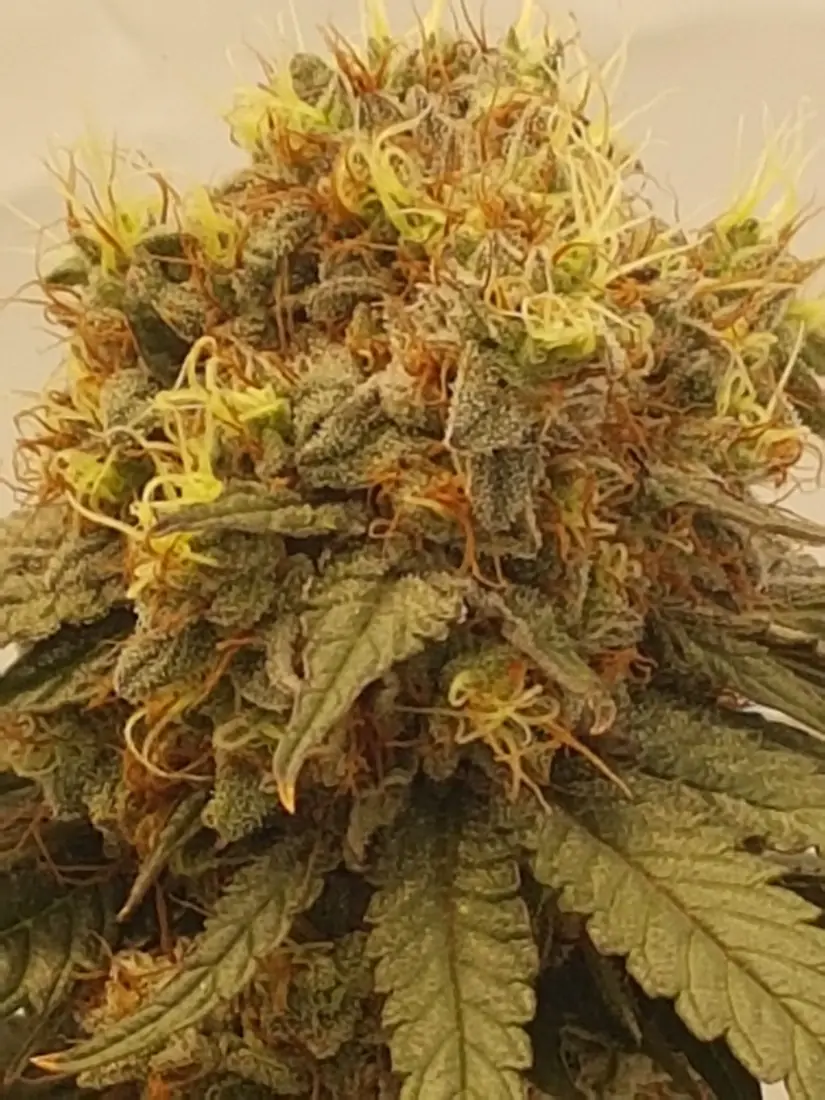
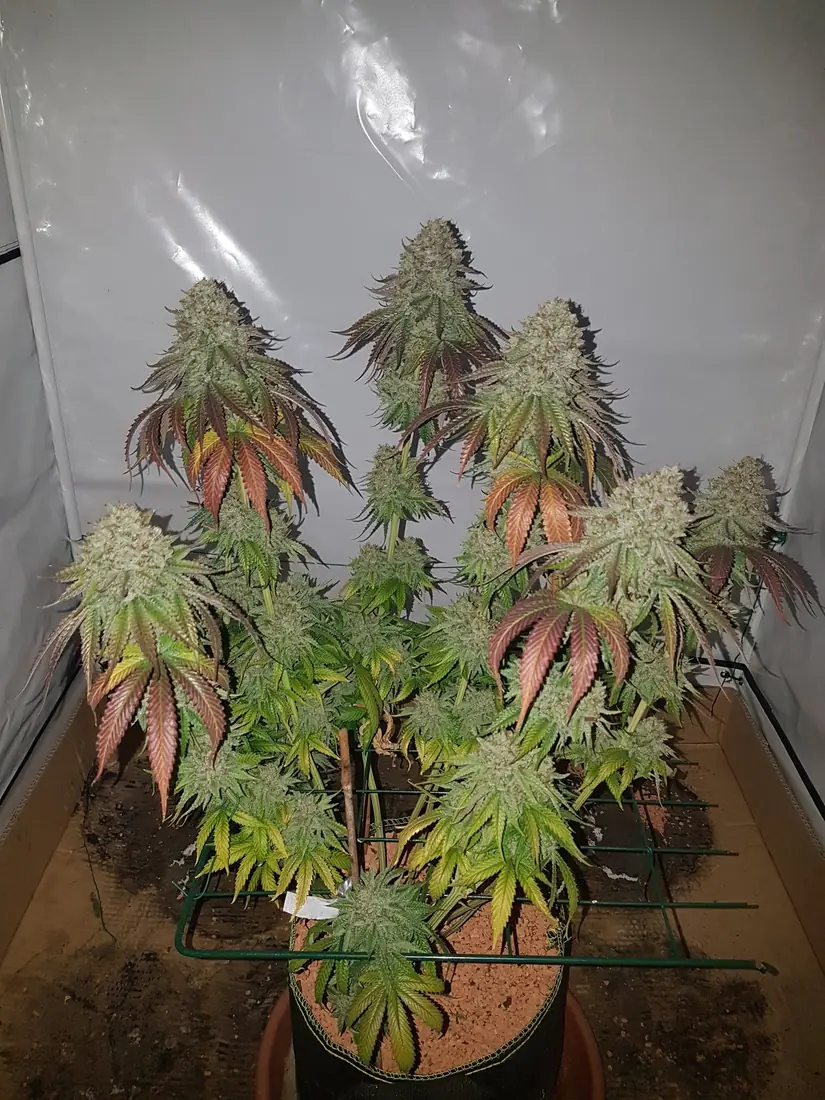
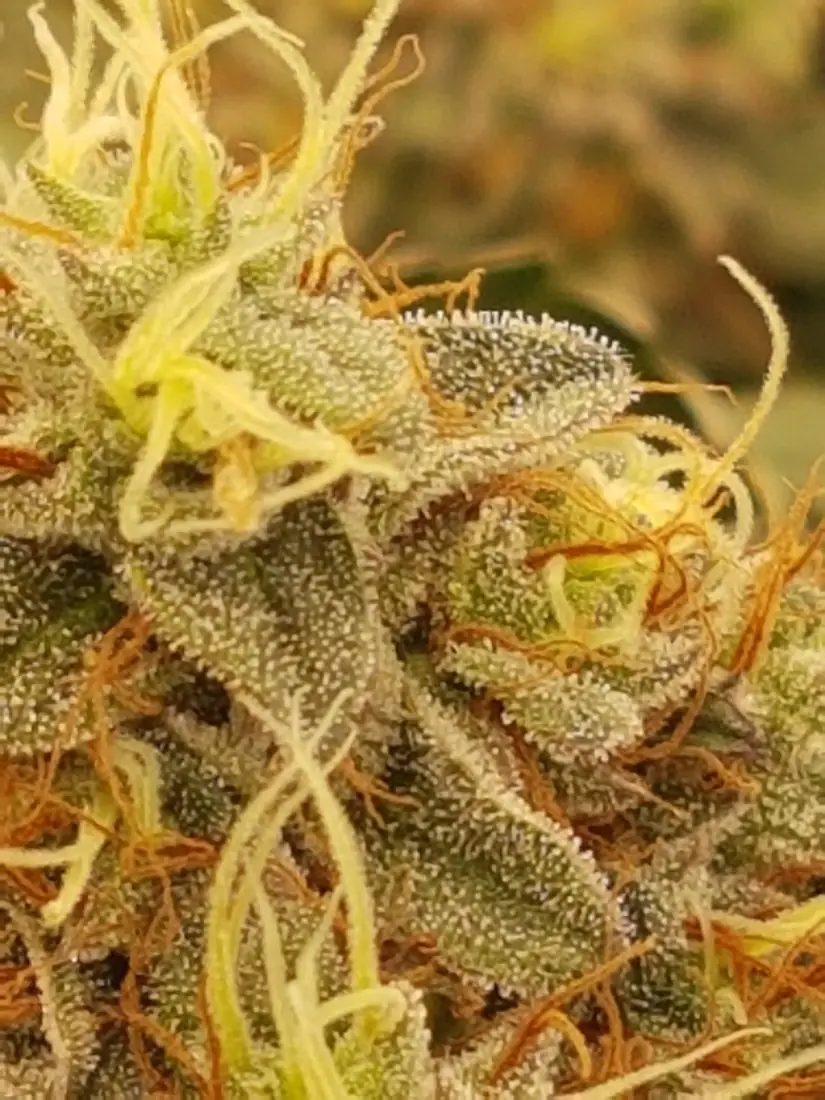
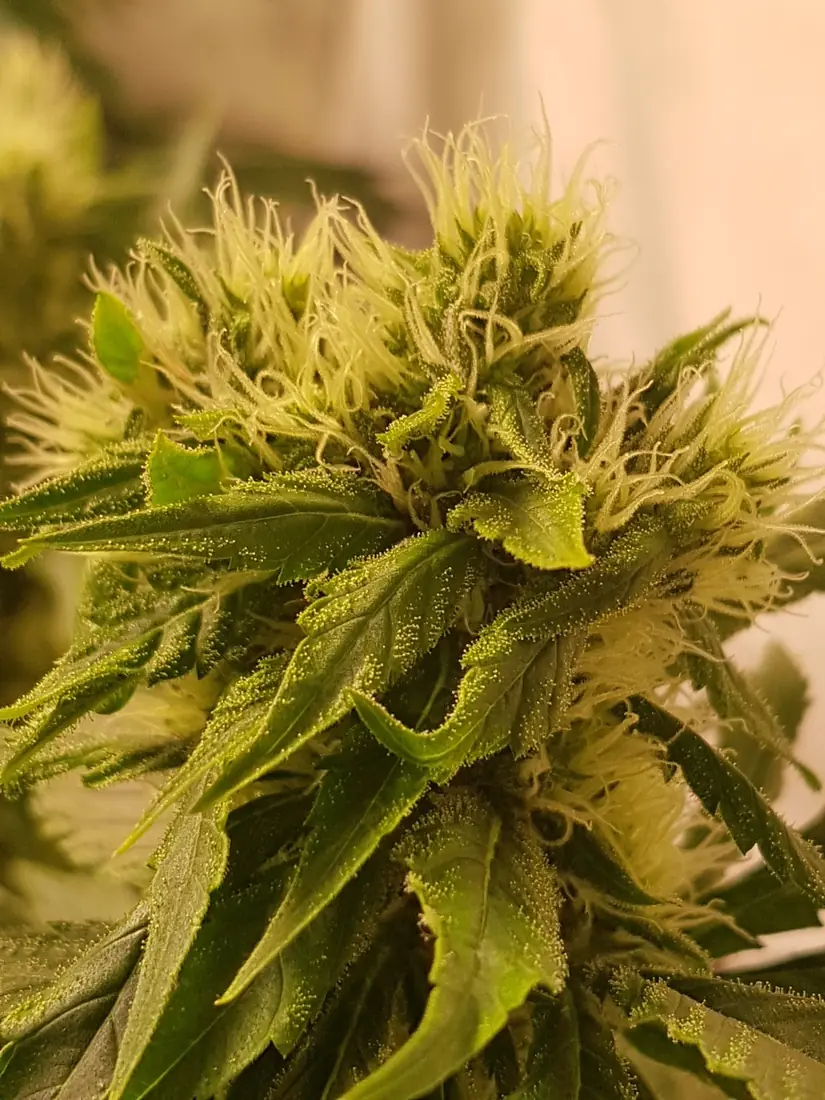
- Do cultivo do Flo: ago. 2025 – White Truffle (cola principal), Red Hot Cookies e Dos Si Dos 33 com muita resina
- Do cultivo do Flo: out. 2026 – Grizzly Glue
- Do cultivo do Flo: out. 2026 – ciclo atual com Mango Kush, Lemon Cherry Gelato, Rainbow Sherbet e Blueberry, quase pronto
- Do cultivo do Flo: ago. 2025 – Black Apple Hitchcock, Fruit Punch e Passion Fruits, prontas a colher
My experience
What always fascinated me about G13 is separating the Hollywood urban legend from the real plant: botanically, G13 was an extraordinarily vigorous, broad-leaf Afghanica (BLD) line with dense trichome coverage and remarkable hybrid vigour.
That is why I combined G13 Haze with Red Hot Cookies for my own breeding project MC Cooki G13 (also a tribute to my three Maine Coon tigers Cookie, Haze and Runtz!). As shown in the Gallery, the cross segregates into two expressive phenotypes uniting the compact, frost-covered calyxes of the G13/Afghanica side with the fruity-spicy terpene profile and purple anthocyanins of the Cookie/Haze parent.
Note: personal experiences are subjective and are not a buying or consumption recommendation.
🌍 Nota sobre a tradução: Este artigo foi escrito originalmente em alemão e traduzido com cuidado. És falante nativo/a e reparaste numa expressão ou termo botânico que pode ser melhorado? Escreve-nos para [email protected] ou no X (@MisterSm3ilz420) – todos os colaboradores são mencionados, a pedido, nos nossos Agradecimentos aos Padrinhos linguísticos!
Fontes
Todos os links verificados pela última vez em 22/10/2026.
- University of Mississippi, School of Pharmacy / National Center for Natural Products Research (NCNPR): Marijuana Research – History (1968–present). pharm.olemiss.edu/marijuana/history/ autoridade
- ElSohly MA, Holley JH, Lewis GS, Russell MH, Turner CE (1984): Constituents of Cannabis sativa L. XXIV: The Potency of Confiscated Marijuana, Hashish, and Hash Oil Over a Ten-Year Period. Journal of Forensic Sciences 29(2):500–514. doi:10.1520/JFS11698J análise de amostras comerciais
- ElSohly MA, Ross SA, Mehmedic Z, Arafat R, Yi B, Banahan BF (2000): Potency Trends of Δ9-THC and Other Cannabinoids in Confiscated Marijuana from 1980–1997. Journal of Forensic Sciences 45(1):24–30. doi:10.1520/JFS14636J análise de amostras comerciais
- ElSohly MA, Mehmedic Z, Foster S, Gon C, Chandra S, Church JC (2016): Changes in Cannabis Potency Over the Last 2 Decades (1995–2014): Analysis of Current Data in the United States. Biological Psychiatry 79(7):613–619. doi:10.1016/j.biopsych.2016.01.004 análise de amostras comerciais
- Schoenmakers N (1987): The Seed Bank of Holland – 1987 Catalogue (Eintrag zu G-13 & G-13-Hybriden) sowie archivierte Züchter-Beiträge von Neville Schoenmakers und Shantibaba im Mr. Nice Forum (mrnice.nl/forum) und Stammbaum-Dokumentation auf SeedFinder.eu. revisão
- Small E (2015): Evolution and Classification of Cannabis sativa (Marijuana, Hemp) in Relation to Human Utilization. The Botanical Review 81(3):189–294. doi:10.1007/s12229-015-9157-3 revisão
- Clarke RC, Merlin MD (2013): Cannabis: Evolution and Ethnobotany. University of California Press, Berkeley. doi:10.1525/9780520954571 revisão
- Sawler J, Stout JM, Gardner KM et al. (2015): The Genetic Structure of Marijuana and Hemp. PLoS ONE 10(8):e0133292. doi:10.1371/journal.pone.0133292 estudo genético
- Timoteo Junior AA, Oswald IWH (2024): Optimized guidelines for feminized seed production in high-THC Cannabis cultivars. Frontiers in Plant Science 15:1384286. doi:10.3389/fpls.2024.1384286 revisão
- Konsumcannabisgesetz (KCanG), § 6 (Werbe- und Sponsoringverbot). gesetze-im-internet.de/kcang/__6.html lei