Growing basics: your first grow
Want to grow yourself for the first time? Great – here is the overview: indoor or outdoor, light, substrate, nutrients, watering, the phases of a plant and the mistakes almost everyone makes at the start. Where there are studies, I link them. Where there is (so far) only practical knowledge, I say so.
The legal framework in Germany in brief (no legal advice; statutory text checked on 22 Oct 2026 on gesetze-im-internet.de; other countries have different – often much stricter – rules)[1]
- At most 3 plants: persons aged 18 and over may privately grow no more than three cannabis plants in total at the same time at their place of residence or habitual abode (§ 9(1) KCanG).
- Protection from access: cannabis and propagation material (seeds, cuttings) must be protected by suitable measures from access by third parties, especially children and young people (§ 10 KCanG).
- No passing on: cannabis from private home growing must not be passed on to third parties (§ 9(2) KCanG) – not even as a gift.
- Watch the harvest amount: at home you may possess no more than 50 g of dried cannabis in total (§ 3(2) KCanG).
More under Legal matters in Germany.
Indoor or outdoor?
| Indoor (e.g. grow tent) | Outdoor (garden, balcony) | |
|---|---|---|
| Light | you control light duration and intensity | free sunlight, but nature sets the day length |
| Flowering | starts when you switch to short days[2] | starts in “normal” strains when the days get shorter[2]; autoflowers are interesting for northern latitudes[4] |
| Cost | equipment and electricity | low |
| Protection (§ 10) | lockable tent or room possible | harder: plants must still be protected from access |
| Risks | heat, poor air, mould with too little ventilation | weather, pests, mould on flowers[6] |
Rows without a source are practical considerations, not study results.
Light
Cannabis is a short-day plant: long days promote growth, short days trigger flowering.[2] Indoors, people therefore usually work in two phases. In one study, for example, plants first grew under 18 hours of light / 6 hours of darkness and then flowered under 12 / 12 hours.[3] With autoflowers the switch is not necessary.[4]
Well established
When choosing a lamp, wattage alone is not what counts, but how much light actually reaches the plants. This is measured as PPFD (in µmol per m² per second) – the studies refer to this value too.[3]
Medium: soil, coco & co.
Roughly, there are three routes (practical knowledge): soil (most forgiving of mistakes, sometimes already contains nutrients), coco coir (airy, but needs targeted feeding) and hydroponics (roots in nutrient solution, lots of control, little buffer). Flo’s practical substrate mix: I blend my own airy medium from quality soil, worm castings (vermicompost), quartz sand and Seramis clay granules, enriched with Living Soil. Seramis stores moisture and nutrients without waterlogging, sand ensures lasting drainage and structure, and worm castings + Living Soil maintain an active soil microbiome.
A note from research: fungal communities in unpasteurised coco coir have been described as a possible source of mould on cannabis plants.[6]
Nutrients
The three main nutrients are nitrogen (N), phosphorus (P) and potassium (K). One hydroponic study is interesting: flower yield rose with nitrogen and phosphorus only up to a calculated optimum – more did not help; it did not respond to potassium at all within the range tested.[5]
“The more the better” is not true for fertiliser. Better to start cautiously and stick to the instructions on the pack. Specific values from hydro studies cannot simply be transferred to soil.[5]
Watering
Root rots are among the most important diseases in cannabis growing[7]: fungi and oomycetes such as Fusarium and Pythium caused brown roots, stunted growth, yellowing and sometimes plant death in studies.[6] For prevention, experts name hygiene, good irrigation management and control of the room climate, among other things.[7]
Practical knowledge (not studied): many growers only water once the top layer of the substrate has dried a little, and make sure excess water can drain away. Flo’s watering & feeding routine: I hand-water daily shortly after the lights turn on – first, because plants open their stomata at the start of the light period when transpiration demand peaks, and second, as a deliberate daily inspection walk: automatic irrigation is convenient, but hand-watering every morning lets you spot the tiniest change in leaves, shoots and soil immediately! Following my motto “Understand nature, then copy nature”, I feed 100% biologically with worm tea (vermicompost liquid) and homemade fermented nettle manure (Brennnesseljauche) (rich in plant-available N, K, iron and silica) alongside strong continuous intake, exhaust and circulation airflow.
The phases of a grow
- Germination: the seed opens and the radicle appears. Flo’s practical tip: For outdoor and autoflower grows, I germinate seeds directly in soil or Jiffy pellets (avoiding transplant shock to the taproot). For indoor photoperiod strains, I briefly pre-soak them in water and then germinate them in a moist cloth/paper towel between two plates or inside a closed lidded box in a warm spot (22–25 °C) until the root tip appears – see Seed Storage & Germination.
- Seedling: the first leaves form; the plant is sensitive now.
- Vegetative phase: under long days the plant grows taller and wider.[2]
- Flowering: under short days (or by themselves in autoflowers) the inflorescences form.[2][4] With regular seeds, it becomes clear by now at the latest which plants are male.
- Harvest, drying & curing: I determine peak harvest timing with a 60× loupe directly on the calyx trichomes (~75–85% milky, 15–25% amber – see Trichome Guide), followed by slow dark drying at 18–20 °C and 55–60% RH with gentle airflow (10–14 days) and curing in airtight glass jars at 58–62% RH to preserve volatile terpenes.
How long each phase lasts depends heavily on strain, seed type and conditions. In botanical literature (Clarke & Merlin 2013; McPartland & Small 2020), flowering duration ranges from 7–9 weeks in compact mountain BLD/Indica lines and 9–11 weeks in modern hybrids to 11–16+ weeks in equatorial NLD/Sativa landraces.[9]
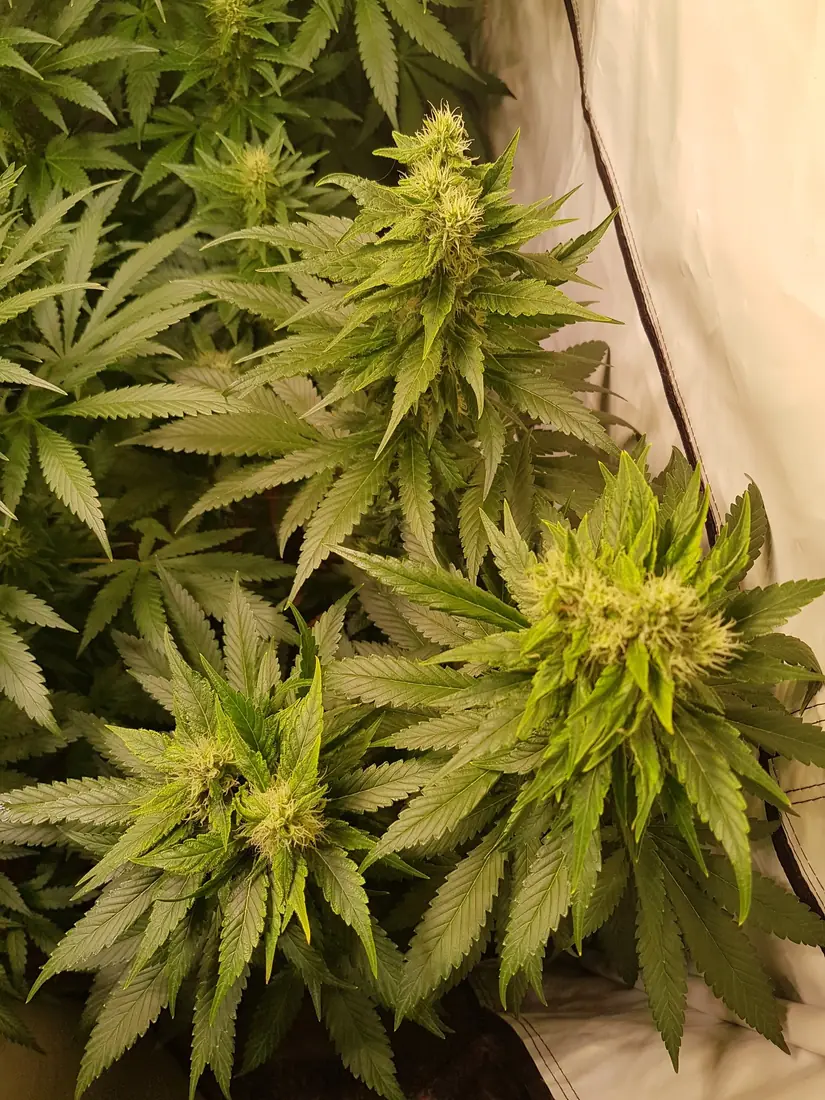
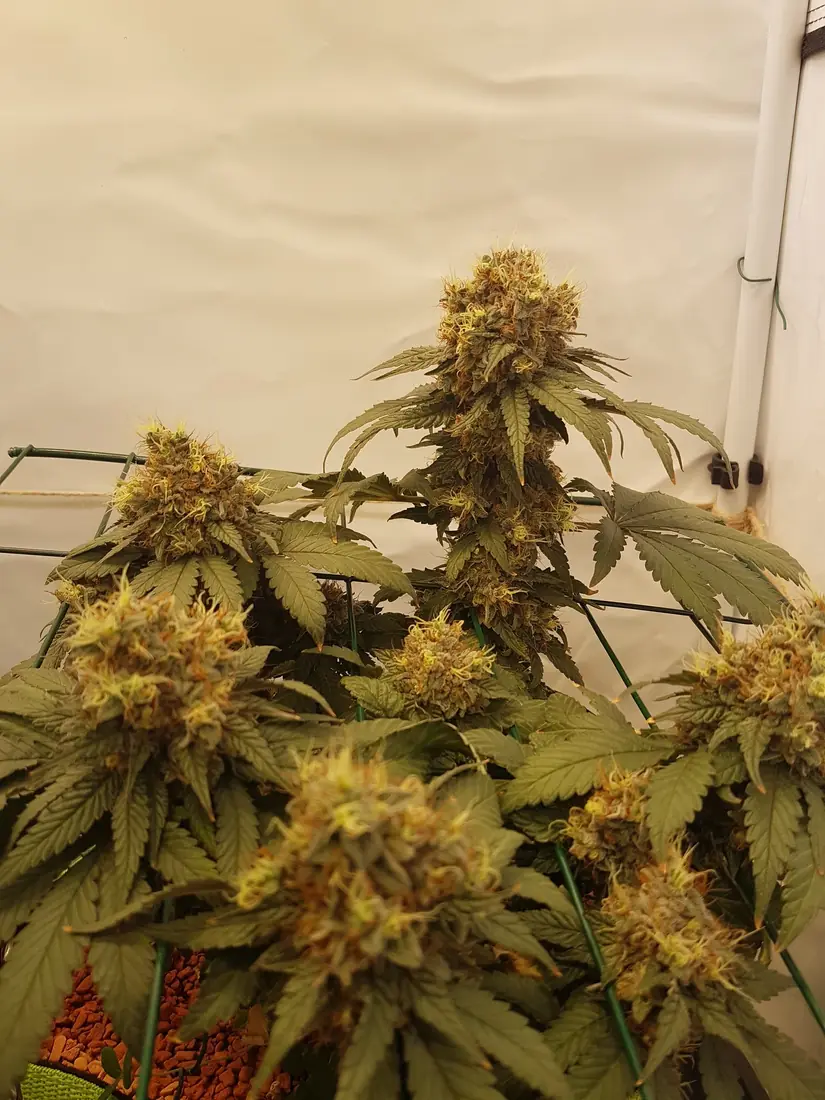
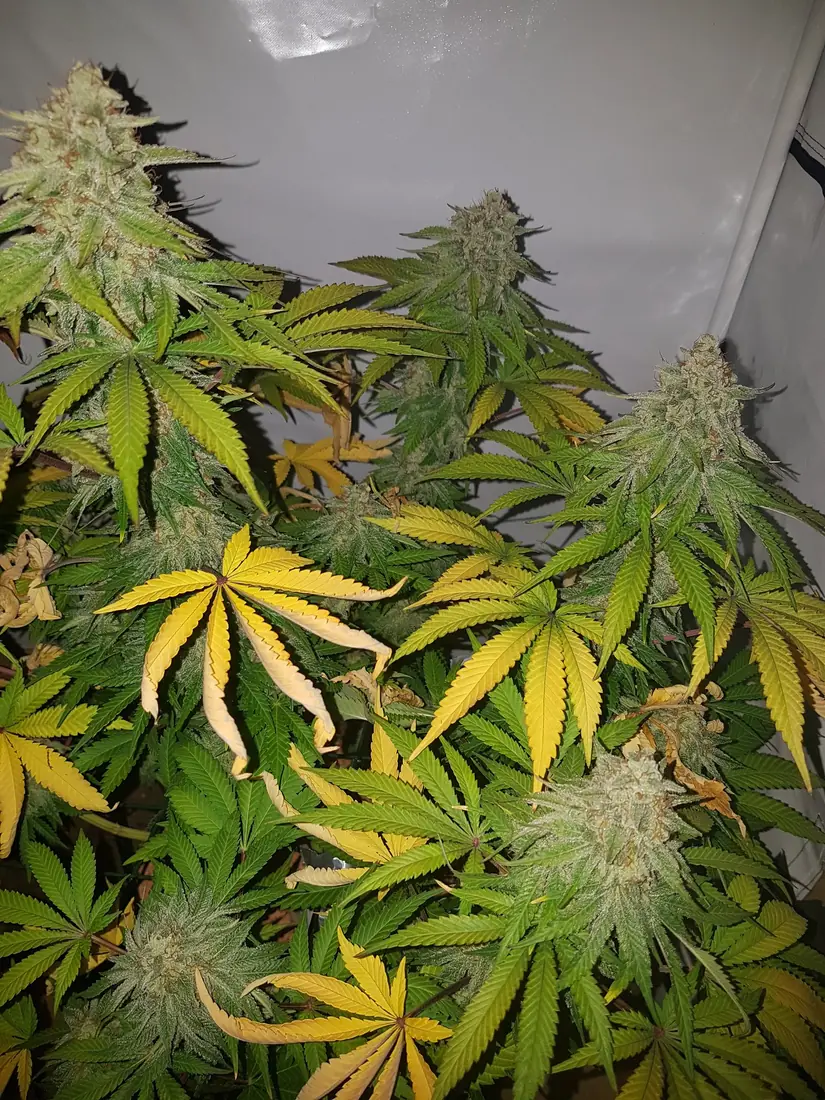
From Flo’s grow: from early flower to shortly before harvest
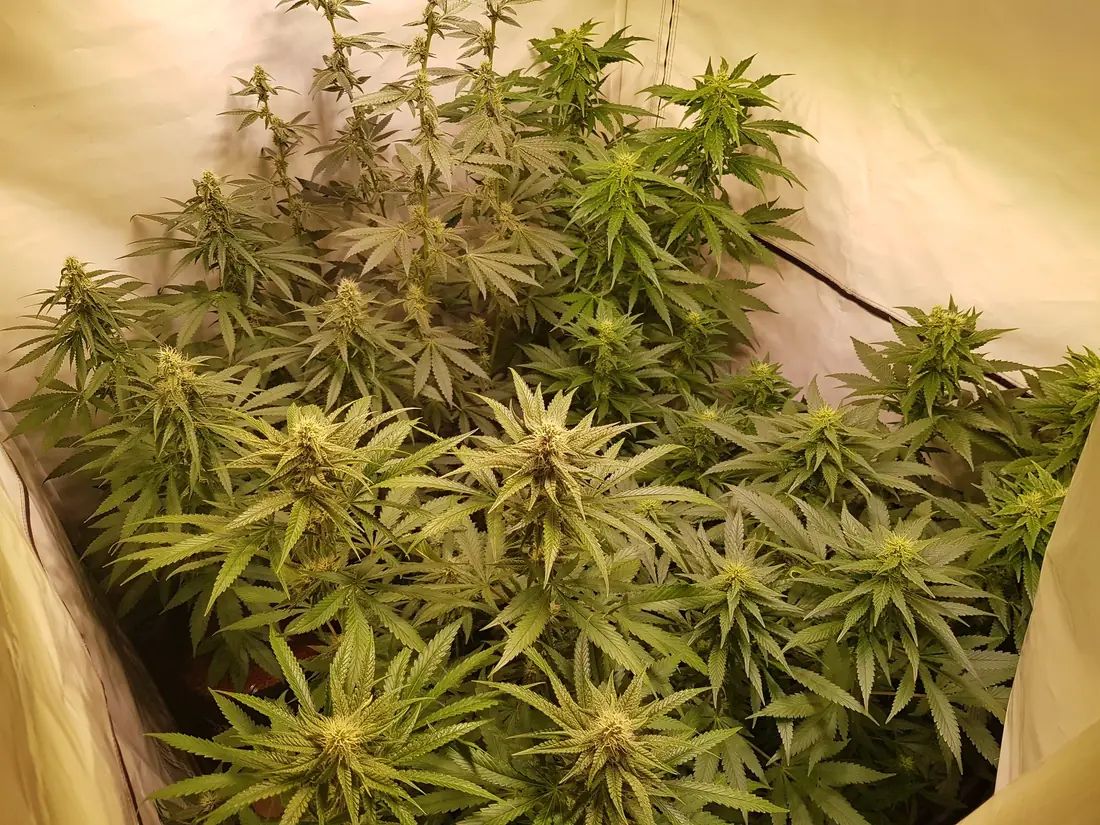
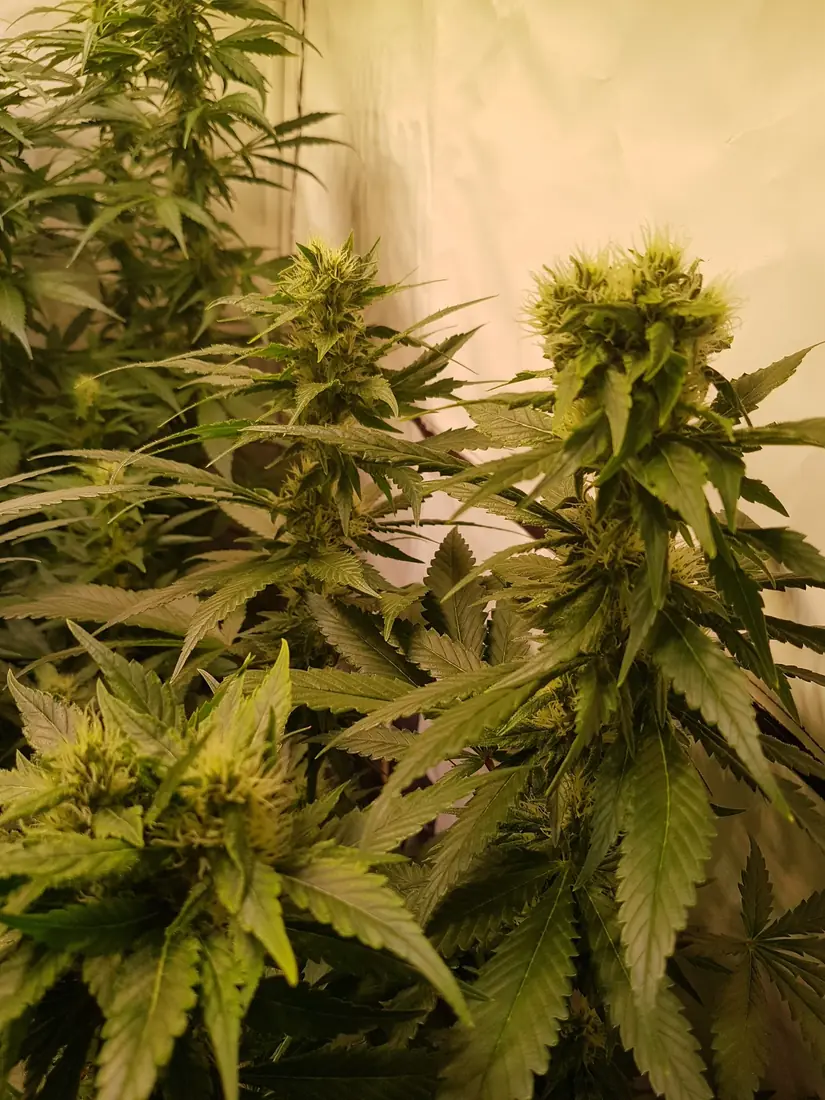
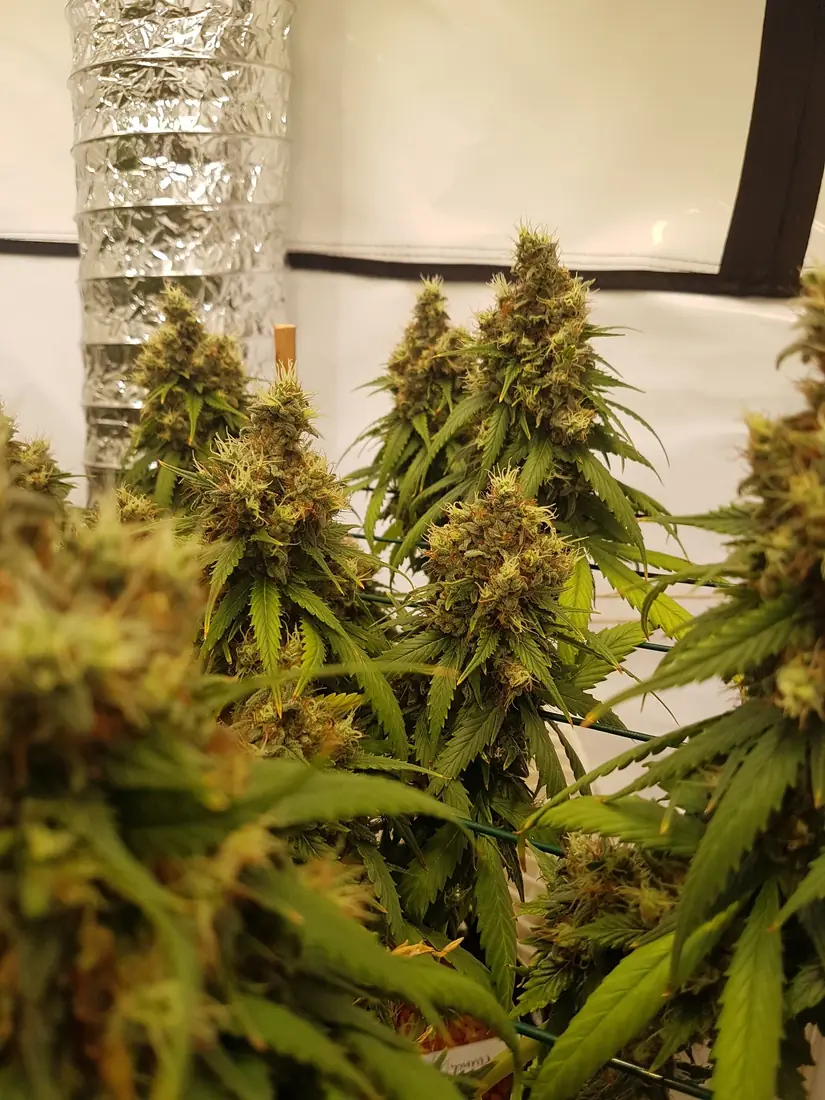
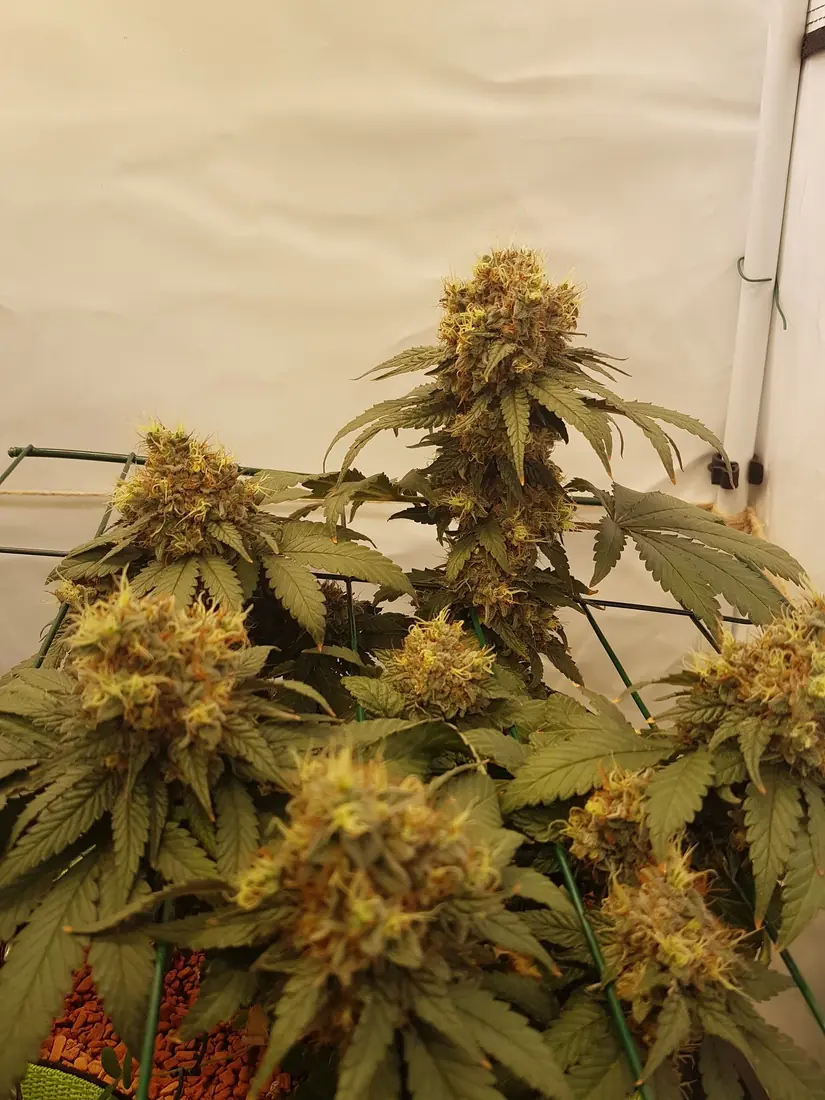
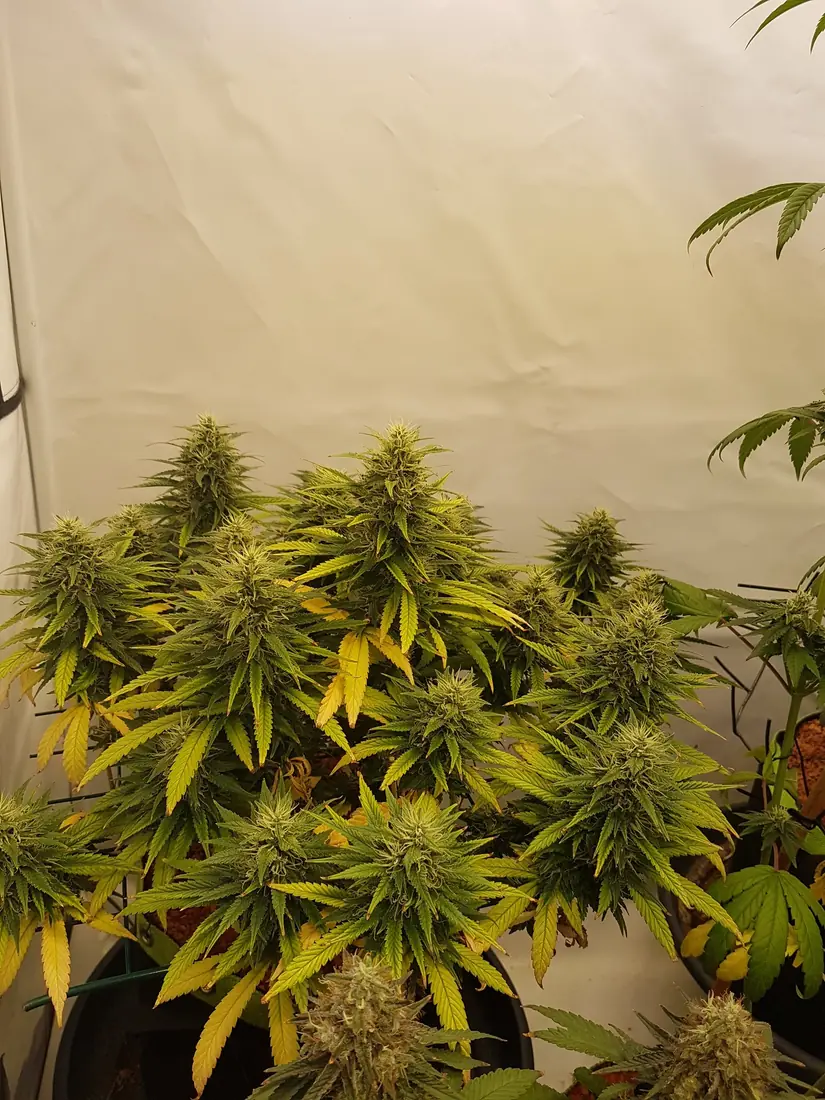
- From Flo’s grow: Aug 2025 – start of flowering week 3, with a very resinous Red Hot Cookies phenotype
- From Flo’s grow: Aug 2025 – White Truffle: on this plant every top bud split
- From Flo’s grow: Aug 2025 – Fruit Punch and Black Apple Hitchcock, one week before harvest
- From Flo’s grow: Oct 2026 – current run with Mango Kush, Lemon Cherry Gelato, Rainbow Sherbet and Blueberry, almost finished
- From Flo’s grow: Aug 2025 – Black Apple Hitchcock, Fruit Punch and Passion Fruits, ready for harvest
Typical beginner mistakes
| Mistake | Why it is a problem |
|---|---|
| Too much fertiliser | In one study, yield only rose up to an optimum.[5] → Deficiencies & pests |
| Waterlogging | Root rot caused by Pythium and Fusarium is a well-known problem.[6][7] |
| Underestimating mould | In one survey, powdery mildew was the most important pathogen on leaves; on flowers, rot caused by Botrytis and Penicillium, among others, was detected.[6] → Deficiencies & pests |
| Missing males | With regular seeds, male plants can pollinate the female ones.[8] |
| Switching light without a plan | The timing affects yield and content in different directions.[2] |
| Forgetting the law | Store plants and seeds securely (§ 10), keep the 50 g possession limit in mind after the harvest (§ 3), pass nothing on (§ 9).[1] |
You will find more about nutrient deficiencies, pests and fungal diseases in the category Deficiencies & pests.
My experience
For me, growing is all about the living plant and its botany rather than chasing a high. Three habits make the biggest difference in my garden:
- Hand-watering daily right after lights-on: As soon as the lamps switch on, leaf stomata open and transpiration begins. Watering by hand every morning instead of relying on blind automation forces me to inspect every single plant closely each day.
- Custom substrate & organic feeding: I mix soil, worm castings, sand and Seramis clay granules enriched with Living Soil, and feed biologically with worm tea and homemade fermented nettle manure (Brennnesseljauche) under strong intake, exhaust and canopy airflow.
- KCanG compliance (§ 9 & § 10 KCanG): Living as three adults in our multi-generational home, we strictly respect the 3-plant-per-adult limit and keep our grow room locked against third-party access.
Note: personal experiences are subjective and are not a recommendation.
🌍 Translation note: This article was originally written in German and carefully translated. Are you a native speaker and noticed a phrasing or botanical term that could be improved? Feel free to message us at [email protected] or on X (@MisterSm3ilz420) – all contributors are honoured on request in our Language Patrons Acknowledgements!
Sources
All links last checked on 22 Oct 2026.
- Konsumcannabisgesetz (KCanG), §§ 3, 9, 10. § 3, § 9, § 10 on gesetze-im-internet.de law
- Dang M, Arachchige NM, Campbell LG (2022): Optimizing Photoperiod Switch to Maximize Floral Biomass and Cannabinoid Yield in Cannabis sativa L.: A Meta-Analytic Quantile Regression Approach. Frontiers in Plant Science 12:797425. doi:10.3389/fpls.2021.797425 meta-analysis
- Rodriguez-Morrison V, Llewellyn D, Zheng Y (2021): Cannabis Yield, Potency, and Leaf Photosynthesis Respond Differently to Increasing Light Levels in an Indoor Environment. Frontiers in Plant Science 12:646020. doi:10.3389/fpls.2021.646020 experimental study
- Leckie KM, Sawler J, Kapos P et al. (2024): Loss of daylength sensitivity by splice site mutation in Cannabis pseudo-response regulator. The Plant Journal 118(6):2020–2036. doi:10.1111/tpj.16726 genetic study
- Bevan L, Jones M, Zheng Y (2021): Optimisation of Nitrogen, Phosphorus, and Potassium for Soilless Production of Cannabis sativa in the Flowering Stage Using Response Surface Analysis. Frontiers in Plant Science 12:764103. doi:10.3389/fpls.2021.764103 experimental study
- Punja ZK, Collyer D, Scott C et al. (2019): Pathogens and Molds Affecting Production and Quality of Cannabis sativa L. Frontiers in Plant Science 10:1120. doi:10.3389/fpls.2019.01120 study
- Buirs L, Punja ZK (2024): Integrated Management of Pathogens and Microbes in Cannabis sativa L. (Cannabis) under Greenhouse Conditions. Plants 13(6):786. doi:10.3390/plants13060786 review
- Timoteo Junior AA, Oswald IWH (2024): Optimized guidelines for feminized seed production in high-THC Cannabis cultivars. Frontiers in Plant Science 15:1384286. doi:10.3389/fpls.2024.1384286 review
- Clarke RC, Merlin MD (2013): Cannabis: Evolution and Ethnobotany. University of California Press, Berkeley / McPartland JM, Small E (2020): A classification of endangered high-THC cannabis (Cannabis sativa subsp. indica) domesticates and their wild relatives. PhytoKeys 144:81–112. doi:10.3897/phytokeys.144.46700 review